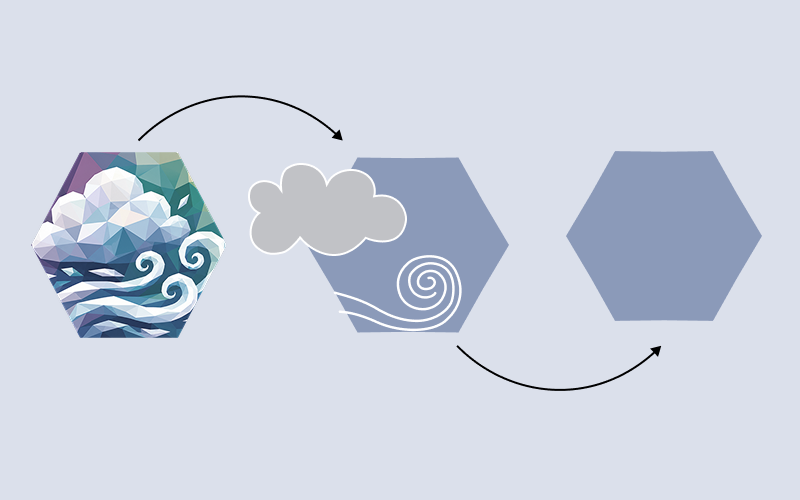

prakriti

Know Your Prakriti! (KYP)

Know Your Prakriti! (KYP) Discover Your Unique Body Constitution Through Ayurveda Have you ever wondered why two people respond differently to the same food, weather or daily routine? Ayurveda explains this individual variation through a concept known as Prakriti. What is Prakriti? In Ayurveda, Prakriti refers to an individual’s natural body constitution, temperament or inherent

Know Your Prakriti! (KYP) Read More »
taste tridoshas

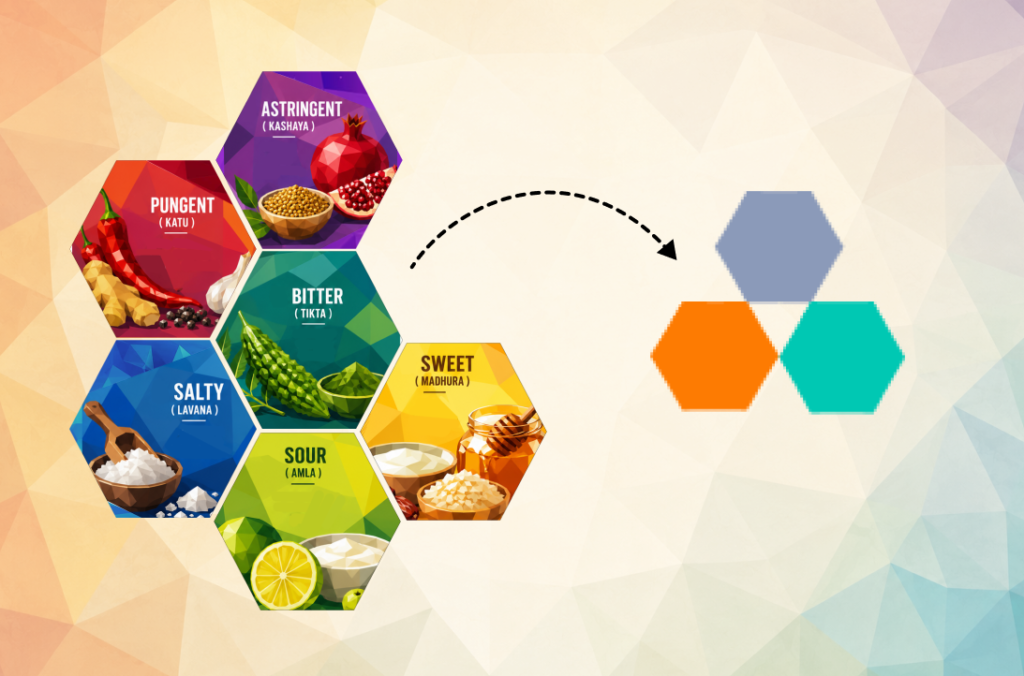
Taste the Tridoshas!

Taste the Tridoshas! The Connection Between the Six Tastes and the Tridoshas in Ayurveda Understanding Shad Rasa and Its Role in Everyday Eating Nature brings many changes to our bodies through the passage of time, daily cycles and changing seasons. In Ayurveda, these changes are understood in relation to the three doshas: Vata, Pitta and

Taste the Tridoshas! Read More »

chatgpt image may 24, 2026, 10 24 43 pm

Behind The Season (BTS)

Behind The Season (BTS) Ayurvedic Seasons: Understanding the Six Ritus and Their Influence on the Doshas Nature changes with every season. Ayurveda teaches us to observe these changes and adapt our food and lifestyle accordingly. What Are the Six Seasons in Ayurveda? Have you ever noticed that your body feels different in summer, during the

Behind The Season (BTS) Read More »

table clock

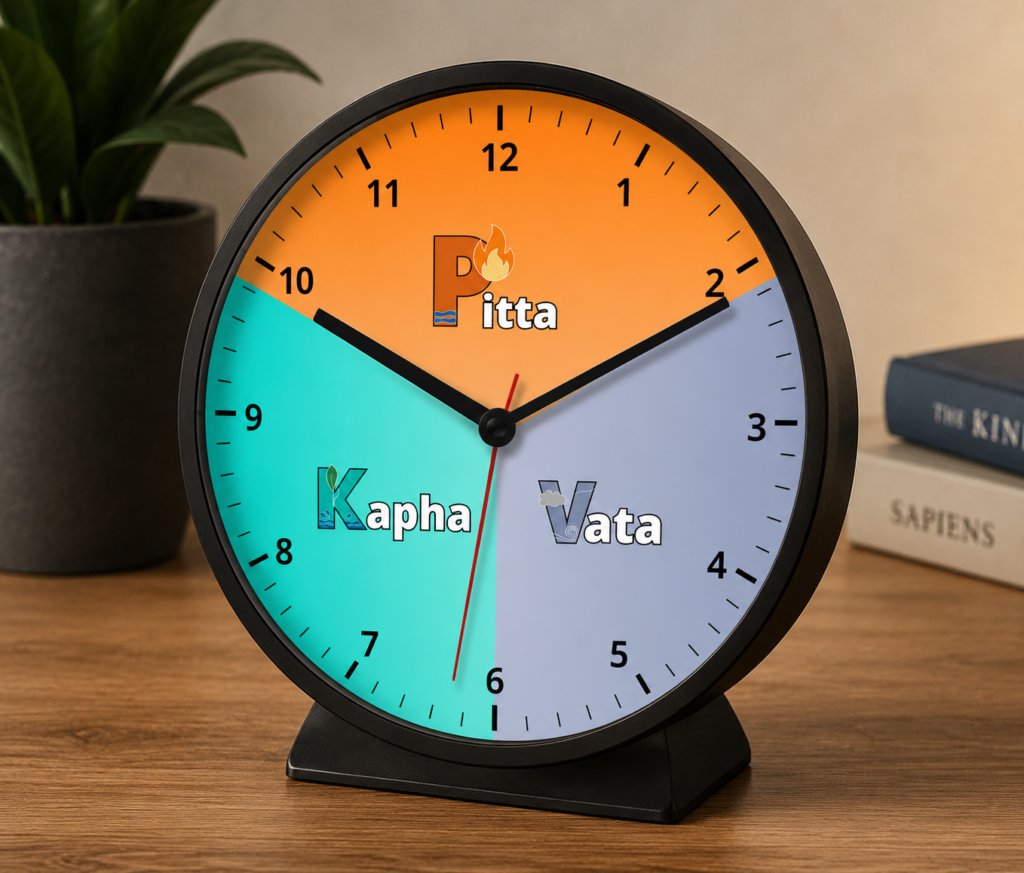
Ayurvedic Clock

Understanding the Rhythm of Doshas Through the Day and Night Nature is constantly changing. Beyond the natural changes that come with age and the changing seasons, Ayurveda describes another rhythm that we experience every day—the changing dominance of the doshas through the day and night. We cannot stop these natural changes. What we can do

Ayurvedic Clock Read More »

vpk body

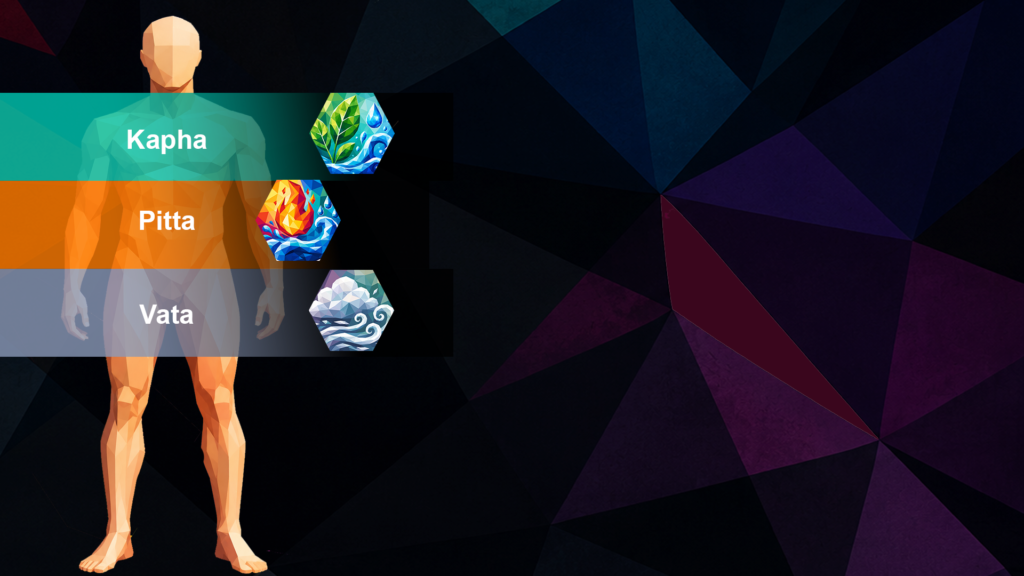
The Positions of the Tridoshas

Tridoshas in the Human Body According to Ayurveda, Vata, Pitta and Kapha pervade the entire body. However, each Dosha has certain regions and tissues where its presence and functions are particularly prominent. Broadly, the body can be viewed in three regions: These broad divisions are described in classical Ayurvedic literature, along with more specific sites

The Positions of the Tridoshas Read More »

kapha shades

Shades of Tridoshas – (Kapha Dosha)

Characteristics of the Pitta Individual The word Kapha comes from two Sanskrit roots: “ka”, meaning water, and “pha”, meaning to flourish. Kapha is also associated with the element Earth, so the combination of Earth and Water gives Kapha its distinctive qualities. Kapha comprises all our cells, tissues and organs. Kapha molecules tend to bind together

Shades of Tridoshas – (Kapha Dosha) Read More »

pitta shades

Shades of Tridoshas – (Pitta Dosha)

Characteristics of the Pitta Individual The word Pitta is derived from the Sanskrit root “tapa,” meaning “to heat.” Pitta represents the principle of Fire and transformation in the body. Everything that enters the body must undergo digestion and transformation—from sensory experiences to the food we eat. Some foods, such as rice, require external cooking before

Shades of Tridoshas – (Pitta Dosha) Read More »

image post

Gajayurveda / Hastyayurveda 🐘

Did you know that the Ayurvedic tradition also included knowledge dedicated to elephants? Known as Gajayurveda or Hastyayurveda, this specialized branch of traditional Indian veterinary knowledge dealt with the health, care and management of elephants. One of the most important classical works associated with this tradition is the Hastyayurveda, traditionally attributed to Pālakāpya. The surviving

Gajayurveda / Hastyayurveda 🐘 Read More »

vata shades

Shades of Tridoshas (Vata Dosha)

Characteristics of the Vata Individual The Sanskrit term Vata is derived from the verb “va,” meaning to carry or move. Thus, Vata is the principle of mobility that regulates all activity in the body—from how many thoughts one might have in a minute to how efficiently food moves through the intestines. The Vata quality is

Shades of Tridoshas (Vata Dosha) Read More »

chatgpt image sep 1, 2026, 07 48 37 pm

From Panchamahabhutas to Tridoshas

The Relationship Between Tridoshas and Pancha Mahabhutas All three Doshas are Panchabhautika, meaning that each is composed of all five Mahabhutas: Akasha (Space) • Vayu (Air) • Agni (Fire) • Jala (Water) • Prithvi (Earth) However, certain Mahabhutas predominate in each Dosha. Dosha Predominant Mahabhutas Vata Akasha + Vayu Pitta Agni + Jala Kapha Jala

From Panchamahabhutas to Tridoshas Read More »