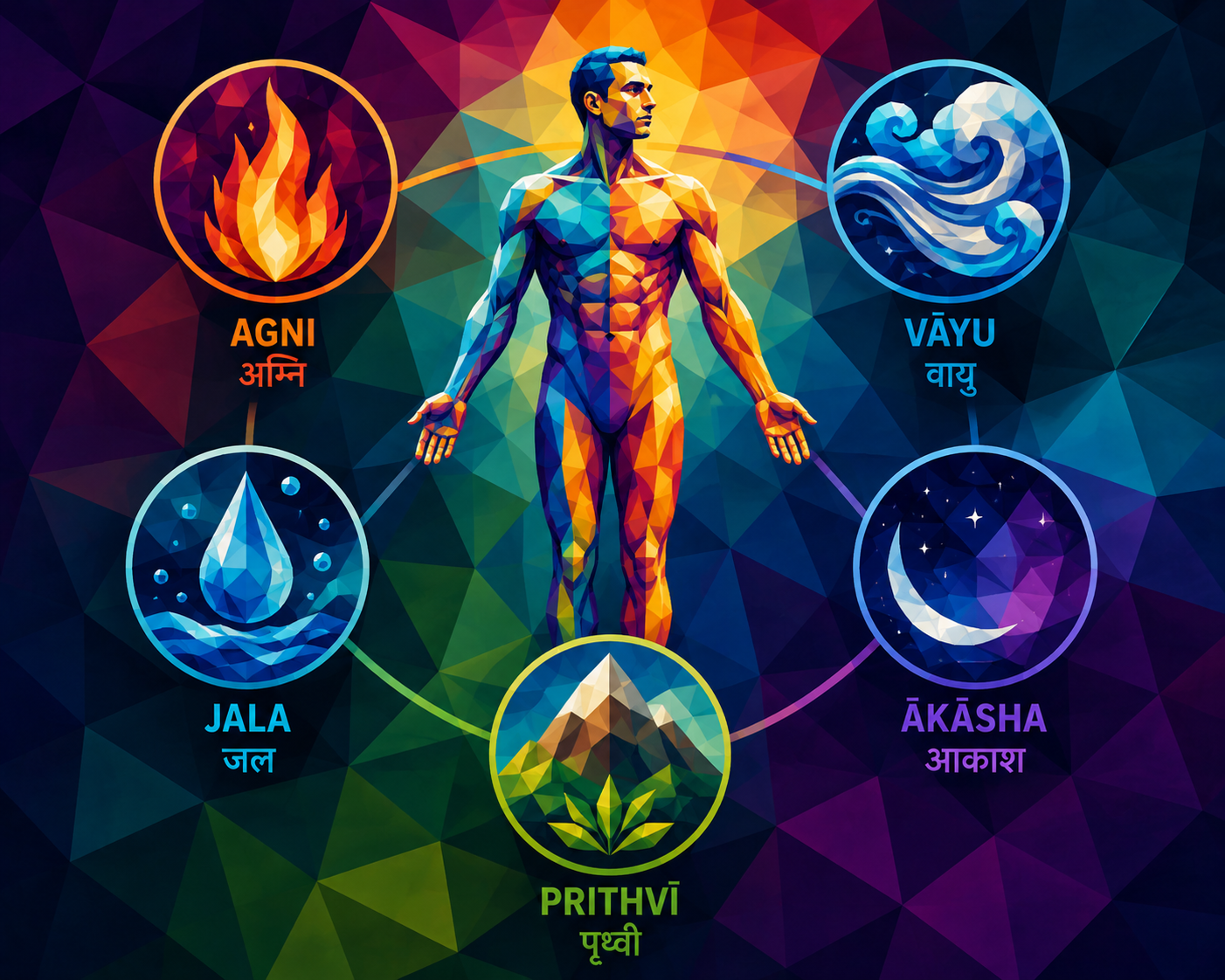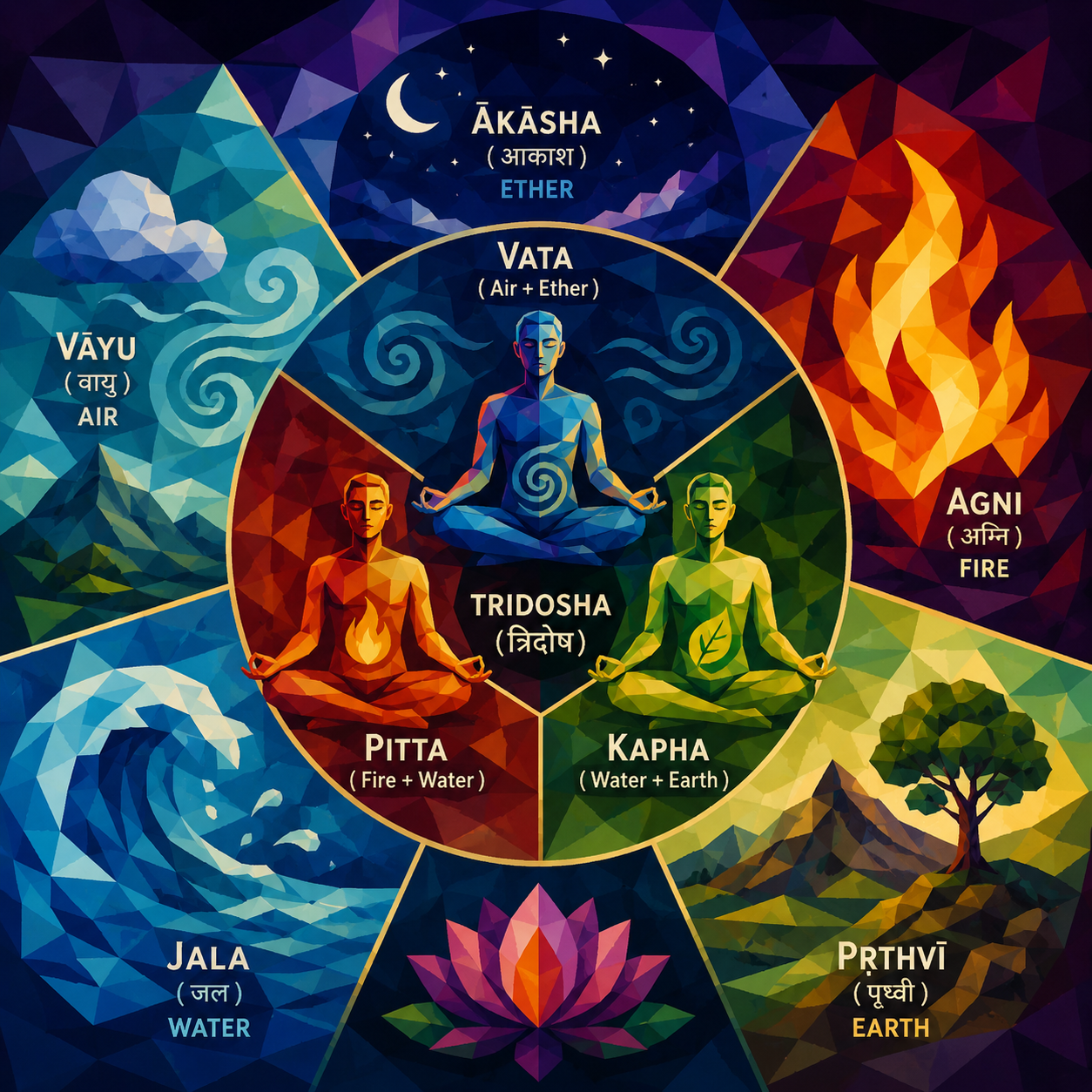
Ayurveda is often perceived as complex because of its Sanskrit terminology and ancient texts. Our goal is to simplify these timeless principles through clear explanations, thoughtful design, and practical examples, making Ayurveda easy to understand and relevant to everyday life.
What is Ayurveda?
Lets go back to begin the journey..
Every journey begins with gratitude. As we embark on our exploration of the timeless healing science of Ayurveda, let us first invoke the blessings of Lord Dhanvantari—the Divine Healer and the revered deity of Ayurveda.
“Om Namo Bhagavate VasudevayaDhanwantaraye Amruta Kalash Hastaya
Sarvamaya Vinashaya
Trilokya Nathan Bhagavate Namaha “

O Lord Dhanvantari, Supreme Lord of the Universe, bearer of the divine pot of nectar and the eternal healer of all beings, remover of diseases, and revered Lord of the three worlds, I bow before You with devotion and seek Your blessings.
Dhanvantari, according to Hindu traditions, emerged during the Samudra Manthana, holding a pot full of amrita (a nectar bestowing immortality) in one hand and the sacred text about Ayurveda in the other hand. He is considered to be the physician of the devas. Dhanvantari is also considered to be an avatar of Vishnu.
The Mythological Origin of Ayurveda
According to ancient Indian tradition, as suffering, diseases, and human misery increased on Earth, the sages gathered in search of a solution for the welfare of humanity. They requested the great sage Daksha Prajapati to approach Lord Brahma, the creator of the universe, and seek the knowledge of Ayurveda to relieve the suffering of mankind.
Lord Brahma is revered as the first expounder of Ayurveda, not its inventor. Ayurveda is considered eternal (Sanatana)—without beginning or end. Using His divine wisdom, Brahma comprehended the science of Ayurveda and imparted this sacred knowledge to Daksha Prajapati.
Daksha Prajapati then passed this knowledge to the Ashwini Kumaras, the twin divine physicians of the celestial realm. Their remarkable healing abilities are mentioned in the Rig Veda, indicating that the principles of healing associated with Ayurveda have existed since the earliest Vedic tradition.
From the Ashwini Kumaras, the knowledge of Ayurveda was transmitted to Lord Indra, the king of the gods. Indra, in turn, passed this sacred science to great sages including Atreya, Bharadwaja, Kashyapa, and Dhanvantari.
These revered teachers composed treatises on Ayurveda and established different traditions of Ayurvedic knowledge. Although many of their original works have been lost over time, their disciples preserved, expanded, and compiled these teachings into the classical Ayurvedic texts that are available today.
Thus, Ayurveda has been passed down through an unbroken Guru–Shishya (teacher–disciple) tradition, preserving its wisdom for generations. This lineage reflects not only the antiquity of Ayurveda but also its enduring significance as a holistic science of life and well-being.
Knowledge Lineage of Ayurveda
Lord Brahma → Daksha Prajapati → Ashwini Kumaras → Indra → Bharadwaja, Atreya, Kashyapa & Dhanvantari → Their disciples → Classical Ayurvedic texts
This traditional account reflects the mythological and spiritual lineage of Ayurveda as described in classical Ayurvedic literature. It symbolizes the transmission of sacred knowledge through generations and underscores Ayurveda’s revered place within the Vedic tradition.
The Meaning of Ayurveda
The Sanskrit word “Ayurveda” is derived from two words: Ayu and Veda.
- Ayu means life.
- Veda means knowledge or science.
Thus, Ayurveda means “The Science of Life,” “The Knowledge of Life,” or “The Art of Living Wisely and Harmoniously.”
The word Ayu does not merely refer to age or lifespan. According to Ayurveda, life is the harmonious union of the body, mind, senses, and soul. Therefore, the seemingly simple term Ayurveda conveys a profound and comprehensive understanding of life.
Ayurveda is the knowledge that guides us in distinguishing between what is beneficial and harmful, appropriate and inappropriate, conducive to happiness or sorrow, and favourable or unfavourable for longevity. It also helps us understand the true nature of life and the factors that influence its quality and duration.
Ayurveda is not merely a system of medicine; it is a comprehensive science of health and well-being. It explains the balanced and imbalanced states of the body, mind, and life, and provides practical guidance on restoring harmony and maintaining lasting health.
Ayurveda embraces the physical, mental, and spiritual well-being of every living being. According to Ayurveda, health is not simply the absence of disease, but a state of continuous physical vitality, mental peace, and spiritual fulfilment.
Ayurveda and Vedic Science
Ayurveda originated as an integral part of Vedic Science, a comprehensive spiritual tradition based on the understanding that the entire universe functions according to universal natural laws.
Vedic Science encompasses disciplines such as Yoga, Meditation, and Astrology. Ayurveda is one of its principal branches, dedicated to the care of the human body and mind. It includes the study of:
- Herbal medicine
- Nutrition and dietetics
- Therapeutic bodywork
- Surgery
- Psychology
- Spiritual well-being
Together, these disciplines offer a holistic approach to health and harmonious living.
Ayurveda – The Upaveda of Atharva Veda
Ayurveda is traditionally regarded as the Upaveda (subsidiary science) of the Atharva Veda, one of the four Vedas:
- Rig Veda
- Yajur Veda
- Sama Veda
- Atharva Veda
The Atharva Veda contains knowledge related to health, healing, and everyday life, making it the natural foundation of Ayurvedic wisdom.
An Eternal Science
Ayurveda is Anadi (without beginning), Ananta (endless), and Sanatana (eternal). It has neither a beginning nor an end, and its wisdom is timeless, boundless, and everlasting.
For thousands of years, Ayurveda has guided humanity toward a healthier, more balanced, and meaningful way of life. Its principles continue to inspire people across the world to live in harmony with nature, themselves, and society.
“Ayurveda is not merely a medical system—it is the timeless science of living in harmony with nature, nurturing the body, calming the mind, and awakening the spirit.”
The Aim of Ayurveda
The primary objectives of Ayurveda can be summarized into two fundamental goals:
- To relieve the suffering of those affected by illness.
- To preserve the health of healthy individuals and guide them toward achieving the four principal aims of human life, known as the Purusharthas.
The Four Purusharthas
Dharma (Righteous Living)
Dharma means living a life of righteousness, fulfilling one’s duties, and acting in ways that promote the well-being of both the individual and society. It includes ethical conduct, truthfulness, compassion, and the practice of spiritual and religious values.
Artha (Prosperity)
Artha refers to earning wealth and acquiring the resources necessary for a secure and meaningful life through honest effort and hard work.
Kama (Fulfilment of Desires)
Kama represents the balanced and ethical fulfilment of worldly desires, emotions, relationships, love, and the enjoyment of life’s pleasures.
Moksha (Liberation)
Moksha is the ultimate goal of life—the attainment of spiritual liberation, self-realization, and union with the Divine, freeing oneself from the cycle of birth and death.
Every individual is encouraged to pursue these four fundamental goals of life, collectively known as the Purusharthas.
Among them, Dharma forms the foundation. By living a righteous life, one can rightfully pursue Artha (prosperity) and Kama (desires), ultimately leading to Moksha, the highest state of spiritual freedom.
However, to achieve these goals, one must first possess Ayu—a healthy and meaningful life. Good health is the foundation of every human aspiration, and Ayurveda teaches that health can be preserved by following its principles of balanced living.
Living the Ayurvedic Way
According to Ayurveda, our body is nourished and shaped by the food we consume. Therefore, we should understand the qualities and effects of the foods we eat and make conscious dietary choices.
Equally important are our daily habits. Ayurveda advises us not to suppress natural bodily urges, such as hunger, thirst, sleep, urination, or defecation, as doing so may disturb the body’s natural balance and contribute to disease.
By maintaining personal hygiene, following healthy daily routines, consuming a balanced diet, and using our senses wisely, we can preserve good health and prevent illness.
Ultimately, Ayurveda is not merely a system of treating diseases—it is a way of life that empowers us to live with health, harmony, happiness, and purpose.
“Swasthasya Swasthya Rakshanam, Aturasya Vikara Prashamanam Cha.”
“The purpose of Ayurveda is to preserve the health of the healthy and to alleviate the suffering of the sick.”
This timeless principle beautifully summarizes the true aim of Ayurveda: prevention before cure, and holistic well-being for all.
Copyright © 2026 Vedic Intelligence™ – All Rights Reserved.