
Black(gram) Magic!
Māṣaḥ — Black Gram / Urad
(अथ माषः [उडद] । तस्य गुणानाह—)
माषो गुरुः स्वादुपाकः स्निग्धो रुच्योऽग्निदीपनः ।
संसन्तर्पणो बल्यः शुक्रलो बृंहणः परः ॥
शिश्नमूत्रमलः स्तन्यो मेदःपित्तकफप्रदः ।
गुदकीलादितृष्णासुपरिक्षूलानि नाशयेत् ॥
कफपित्तकरा माषाः कफपित्तकरं दधि ।
कफपित्तकरा मत्स्या वृन्ताकं कफपित्तकृत् ॥
Māṣa is heavy to digest, sweet in vipāka (post-digestive effect), unctuous, taste-promoting and pacifies vāta doṣa. It is laxative, nutritious, strength-promoting, increases śukra dhātu, and is highly nourishing to the body. It is helpful in eliminating faeces and urine, increases breast milk, and increases fat and kapha doṣa. It is useful in piles, facial palsy, dyspnoea, and pain associated with disorders of digestion (pain after digestion).
Māṣa, dadhi (curd), matsya (fish) and vṛntāka (brinjal/eggplant) aggravate kapha-pitta doṣas.
Synonyms (etymological derivation)
Māṣaḥ — “Mīyate Māṣaḥ” — it is counted among the dhānyas (grains/cereals).
“It destroys vāta and conditions such as piles” — from the root maṣ, meaning “to destroy/injure.”
“Other substances are measured with it” — it is a unit of measurement.
Properties, therapeutic uses etc.
Māṣa is sweet, strength-promoting, bulk-promoting, and hot in potency. It is vṛṣya (promoting reproductive vitality), galactagogue (promoting breast milk), and aggravates kapha and pitta doṣas. Its decoction is given in joint disorders. Its roots are used in insomnia due to pain in the bones.
Māṣa is used internally and externally in disorders due to vāta doṣa. It is also used in neurological disorders.
It forms a chief ingredient of pāpada, vaḍā, and delectable South Indian breakfast foods such as idli and dosa, which are prized for their porous and cellular texture, taste and flavour.
The pulse showed a marked cholesterol-lowering effect in serum, liver and aorta when fed to rats. When fed along with a normal or hypercholesterolemic diet, serum phospholipid levels were also lowered.
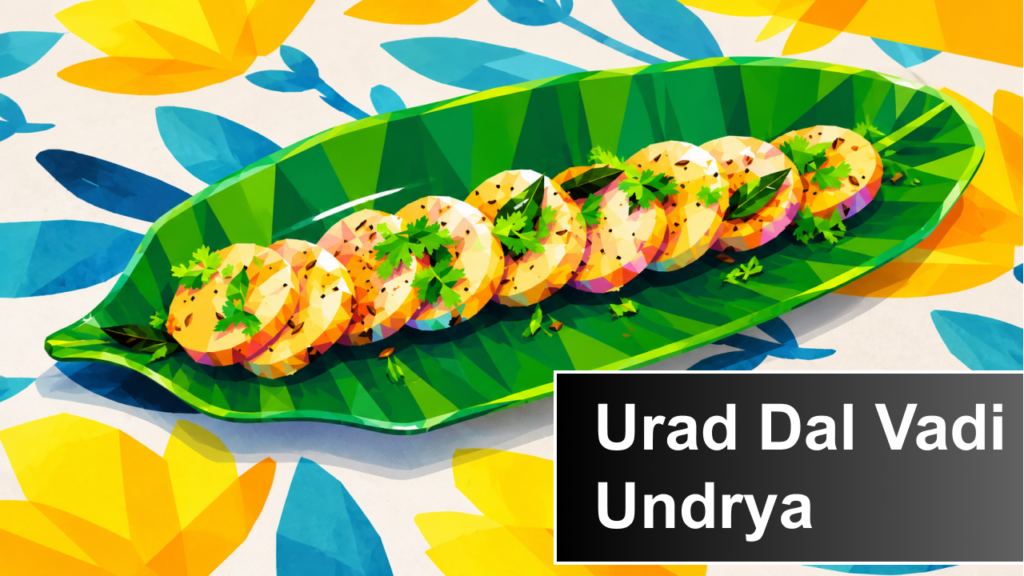
Undarya
Ingredients
Urad dal flour (Black gram flour) – 1 cup
Ground mixture (green chilli + fresh coriander + cumin) – 1 tablespoon
Asafoetida (Hing) – ½ teaspoon
Black pepper powder – ½ teaspoon
Coriander powder – 1 teaspoon
Cumin seeds – 1 teaspoon
Curry leaves – 8–10 leaves
Salt – to taste
Ghee – 2 tablespoons
Method
In a large mixing plate or bowl, combine urad dal flour, salt, coriander powder, black pepper powder and the ground mixture. Add water as required and knead into a soft dough. Heat water in a vessel and bring it to a boil for steaming. Grease a plate with ghee and shape the dough into a long roll. Place it on the greased plate. Steam the roll for approximately 15 minutes.
Allow it to cool and then cut it into small pieces. Heat ghee in a kadai. Add cumin seeds, asafoetida and curry leaves and prepare the tempering.
Add the steamed pieces and sauté gently. Alternatively, the pieces can be shallow-fried or fried in ghee or oil according to preference.
Undarya is ready to serve!
🌿 Ayurvedic Benefits
These are considered strength-promoting, nourishing, reproductive-tissue-supporting, and heavy to digest. They are traditionally described as beneficial for Vata, loss of appetite (Aruchi), and Ardita Vata, a condition in which the face or mouth becomes deviated to one side.
If there is no desire to eat during an illness, these may be given. However, since they are guru (heavy and difficult to digest), only 1–2 should be taken according to the individual’s condition and digestive capacity.
From an Ayurvedic perspective: Urad dal can be relatively heavy and Vata-increasing. The use of cumin, asafoetida, black pepper and ghee can make the preparation more digestively supportive. In an appropriate quantity, it can be a nourishing and strength-supporting preparation.
Copyright © 2026 Vedic Intelligence™ – All Rights Reserved.