
A Water Chestnut to Crack!
Śṛṅgāṭakam (Water Chestnut)
शृङ्गाटककम्
(Śṛṅgāṭaka [Siṅghāḍā] — its names and properties are described below.)
शृङ्गाटकं जलफलं त्रिकोणफलमित्यपि ॥
शृङ्गाटकं हिमं स्वादु गुरु वृष्यं कषायकम् ।
ग्राही शुक्रानिलश्लेष्मप्रदं पित्तास्रदाहनुत् ॥
Śṛṅgātaka, Jalaphala and Trikoṇa-phala are synonymous names for the same fruit.
According to the classical description, Śṛṅgāṭaka is cold in potency (śīta/hima), sweet in taste (madhura) and astringent (kaṣāya). It is guru (heavy to digest) and vṛṣya (supportive of reproductive vitality). It has a grahī or absorbent/binding action, supports śukra dhātu, may aggravate vāta and kapha, and is described as pacifying pitta and rakta and relieving sensations of burning.
Synonyms and their derivation
Śṛṅgāṭaka (शृङ्गाटक) — The fruit has horn-like projections, resembling the horns of a cow.
Jalaphala (जलफल) — Jala means water; the name refers to it being the fruit of an aquatic plant.
Trikoṇa-phala (त्रिकोणफल) — The fruit is described as triangular in shape.
Properties and traditional uses
The fruit is described as cold in potency, haemostatic and astringent, and as relieving burning sensations and fatigue.
The fresh, tender kernels are described as sweet, delicious, farinaceous and nutritious.
Traditionally, Śṛṅgāṭaka is consumed during fasting. A gruel prepared from it is described in the classical source as useful for dysentery and vaginal discharge.
It is described as beneficial for people with a pitta-prakṛti and for pregnant women.
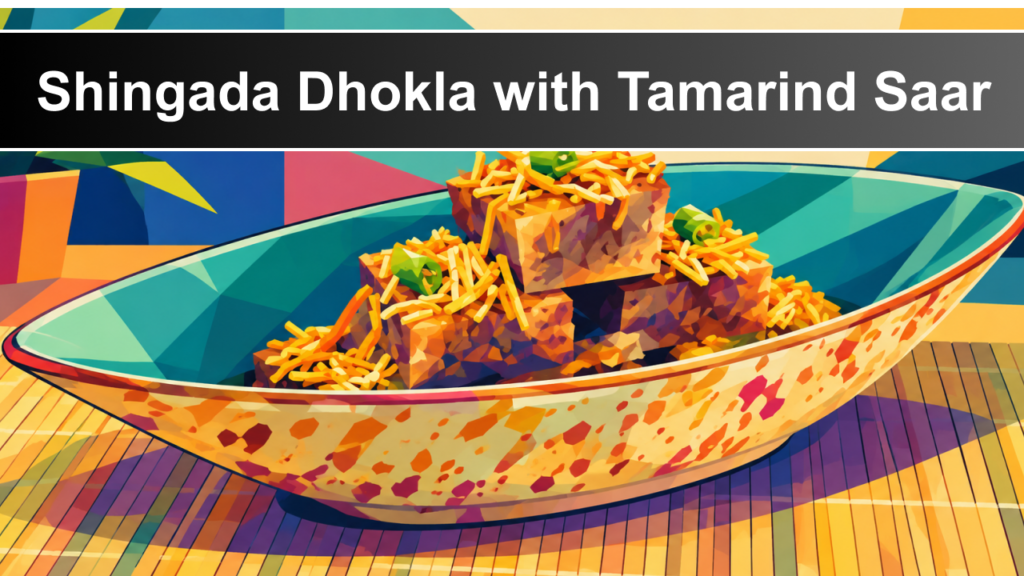
Shingada Dhokla with Tamarind Saar
Ingredients
For the Dhokla
Water chestnut flour (Shingada flour) – 1 cup
Yogurt – ¾ cup
Water – 1 cup
Rock salt – 1 tsp
Green chilli – 1
Baking soda – ½ tsp
Lemon juice – 1 tsp
For the Tamarind Saar
Oil – 2 tbsp
Cumin seeds – 1 tsp
Green chilli – 1
Thin tamarind pulp – 2 cups
Grated ginger – 1 tsp
Red chilli powder – 1 tsp
Rock salt – 1 tsp
Jaggery – ¼ cup
Method
Keep water boiling in a wide vessel for steaming.
Meanwhile, add shingada flour, yogurt, water, green chilli and rock salt to a mixer jar and blend briefly until the mixture becomes smooth and well combined.
Add lemon juice and baking soda and mix gently.
Ayurvedic Note – Baking soda has a traditional Ayurvedic connection with Svarjikā Kṣāra, a type of Kṣāra associated with sodium bicarbonate.
Grease a wide tray with oil and pour in the batter. Steam for about 15 minutes.
The dhokla is ready.
Now prepare the tamarind saar. Heat oil in a pan and add cumin seeds and green chilli for tempering. Add the tamarind water, rock salt, red chilli powder and jaggery. Bring it to a good boil.
The tamarind saar is ready.
Serve the dhokla hot with the warm saar. A little shingada sev or fasting-friendly sev on top makes it even more flavourful and tangy.
Ayurvedic perspective
Shingada (water chestnut) is described in Ayurvedic sources as madhura (sweet), kashaya (astringent), guru(heavy) and sheeta (cooling), with grahi action. It is traditionally associated with management of atisara(diarrhoea).
The tamarind-based saar, with its sour taste and ginger, can be presented as a flavourful accompaniment traditionally associated with supporting digestion rather than as a medicinal treatment. Ayurveda places Agni(digestive function) at the centre of digestion.
“Traditionally, shingada is considered grahi and is associated with supporting bowel firmness, while the tangy ginger-tamarind saar makes the meal more appetising and flavourful.”
Copyright © 2026 Vedic Intelligence™ – All Rights Reserved.