
A Banana a Day? Why not?
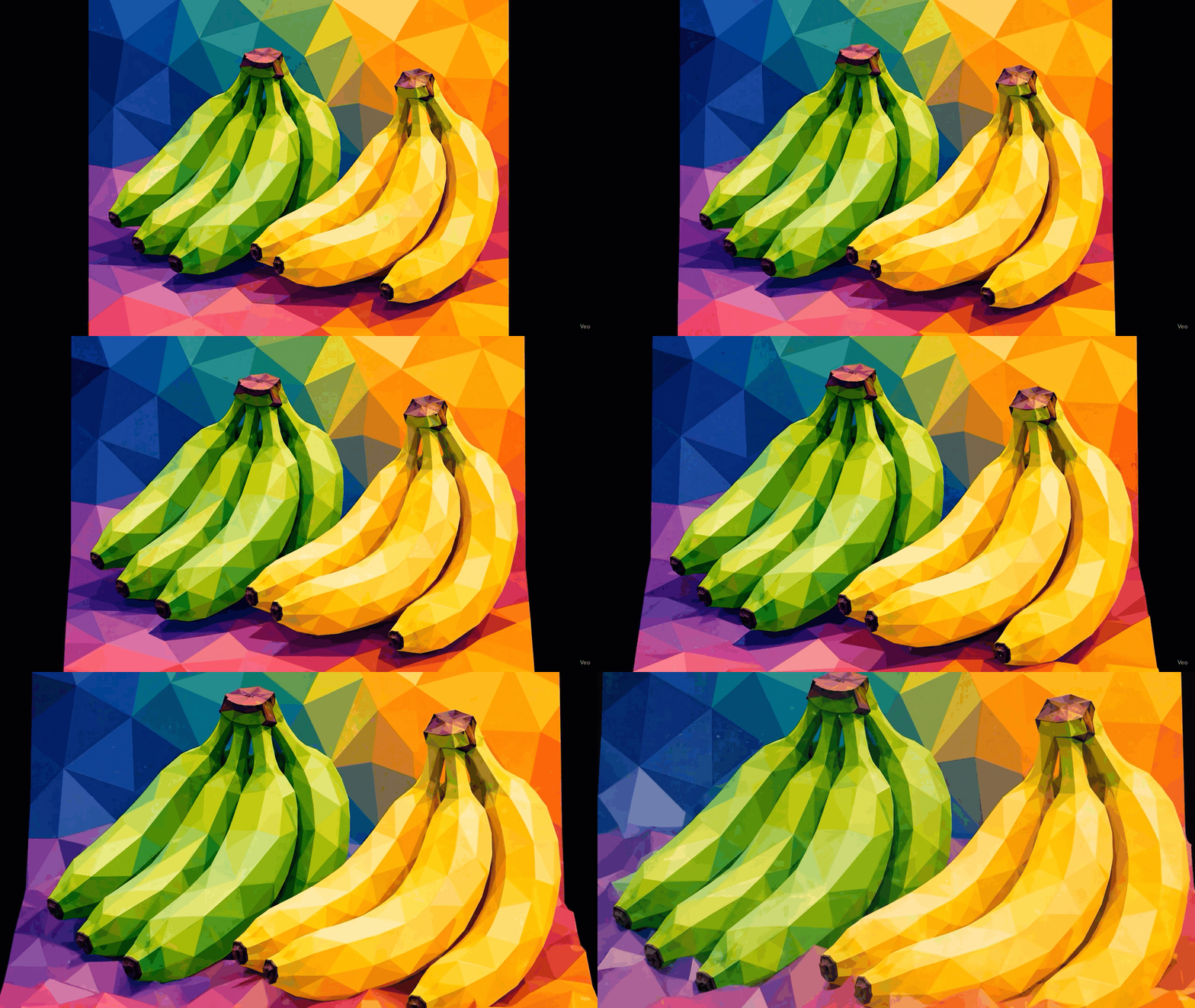
Kadali, Vāraṇā, Mocā, Ambusārā and Aṃśumatphalā are synonyms of Banana.
Mocāphalam is sweet in taste (madhura rasa), cold in potency (śīta vīrya), flatulent, aggravates Kapha doṣa, and is guru (heavy to digest). It is unctuous (snigdha) and pacifies Pitta, Rakta and Vāta doṣas. It is useful in burning sensation, wounds (lung cavity?), and consumption.
When fully ripe, it is sweet in taste, cold in potency, sweet in post-digestive effect (madhura vipāka), vṛṣya(aphrodisiac/reproductive-strength promoting), and body bulk-promoting. It is useful in excessive hunger and thirst, eye diseases, and diabetes. It promotes taste (ruci) and supports the formation of Māṃsa Dhātu (muscle tissue).
There are many varieties of Kadali, such as Māṇikya, Mārtvā, Amṛtā and Campakā, etc. All the properties described above are present in them to a greater degree. They are also characterized by their ability to avoid aggravating the doṣas and by easy digestibility.
Synonyms – Etymological Derivation
Kadalī — Its leaves are torn by a slight wind. Its leaves contain plenty of water.
Vāraṇā — It is liked and eaten by elephants.
Mochā — The leaf gives juice when its petiole is cut. The stem consists of layers.
Ambusāra — Its internal portion consists of plenty of water.
Aṃśumatphalā — The fruits in the bunch are arranged like the rays of the sun; therefore, it is also called Bhānuphalā.
Properties and Uses
Ripe fruits are strength-promoting, useful in bleeding disorders, astringent and nutritious. They are used as a beneficial diet in chronic diarrhoea.
Unripe fruits, along with other drugs, are used in diabetes.
The ashes produced by burning the plant contain a large amount of potash salts and are used as an antacid in acidity, heartburn and colic.
A vegetable preparation made from the flowers is used in diabetes and bleeding disorders.
The juice of the stem is used in epilepsy, hysteria and other Vātika disorders.
The sugars present in banana fruit tend to increase gram-positive or acidic groups of microorganisms in the intestines and decrease gram-negative organisms.
The ripe fruit is reported to be useful in diabetes, uremia, nephritis, gout, hypertension and cardiac diseases. Unripe fruit and cooked flowers are useful in diabetes.
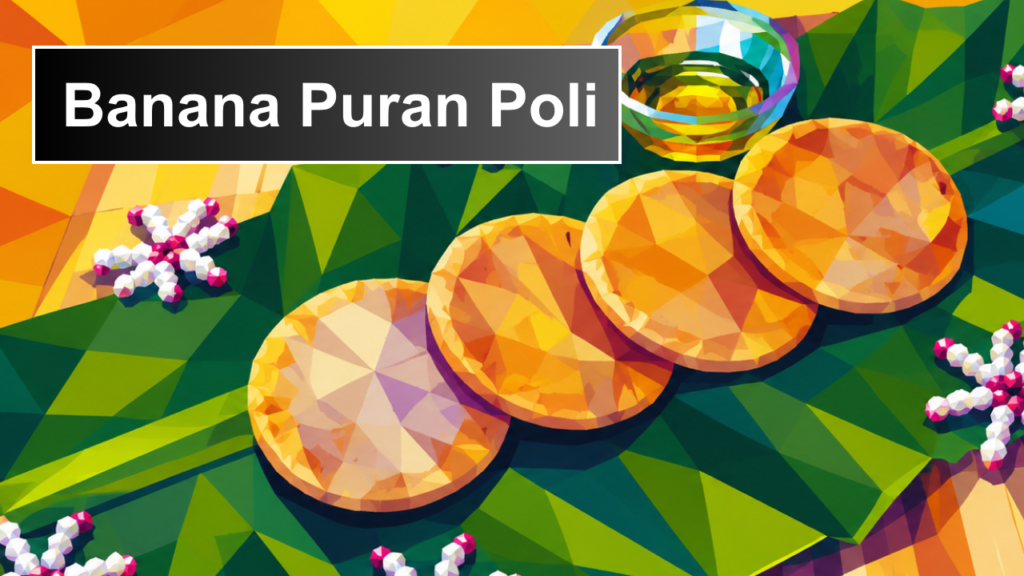
Banana Puran Poli
Ingredients
Raw banana (boiled) – 1
Rock sugar powder – ½ cup
Cardamom powder – ½ tsp
Nutmeg powder – a pinch
Salt – a pinch
Ghee – 2 tsp
Amaranth flour (Rajgira flour) – 1 cup
Method
Peel the boiled banana and grate it finely.
Heat a pan and add the grated banana and rock sugar powder. Sauté well until combined. Add the cardamom powder and nutmeg powder and mix thoroughly. Once the mixture thickens, switch off the heat and allow the banana filling to cool completely.
In a mixing bowl, combine the amaranth flour and salt. Gradually add lukewarm water and knead into a soft dough. Lightly grease your hands with oil and divide the dough into small portions.
Stuff each dough ball with the banana filling and gently roll it into a small flatbread.
Since amaranth flour tends to be crumbly and does not roll out perfectly round, you may use a mold or cutter to shape neat round polis.
Heat a griddle (tawa), cook the polis by applying a ghee, on both sides until golden brown and crisp.
Serve hot with a drizzle of ghee.
Ayurvedic Benifits
🍌 Nourishes and strengthens the body – Banana and rajgira provide natural nourishment and support healthy tissue development (Dhatu Poshana).
🔥 Supports digestive comfort – Cardamom and nutmeg help balance the heaviness of banana and aid digestion.
⚡ Provides sustained energy – Rajgira and natural sweeteners offer long-lasting energy and help reduce fatigue.
🌿 Helps balance Vata – The sweet taste (Madhura Rasa) along with ghee has a calming and grounding effect on Vata Dosha.
✨ Promotes Ojas and vitality – Ghee, banana, and rock sugar are traditionally considered nourishing foods that support strength and overall well-being.
Copyright © 2026 Vedic Intelligence™ – All Rights Reserved.