Over the Moong!

Mudgah
(अथ मुदगः [मूँग] स… तस्य गुणानाह—)
मुदगः रूक्षो लघुग्राही कफपित्तहरो हिमः ।
स्वादुरल्पानिलो नेत्र्यो ज्वरघ्नो व्रणशोधनः ॥
मुदगः बहुविधः श्यामो हरितः पीतकस्तथा ।
श्वेतो रक्तश्च तेषान्तु पूर्वः पूर्वो लघुः स्मृतः॥
सुश्रुतेन पुनः प्रोक्तो हरितः प्रवरः गुणैः ।
चरकादिभिरप्युक्त एव एव गुणाधिकः ॥
Mudga (green gram / mung bean) is described as drying (rūkṣa), light (laghu), and grahī in its action. It helps balance Kapha and Pitta doṣas and has a cooling potency. It is sweet in taste, may slightly aggravate Vata, and is described as beneficial for the eyes and useful in fever. It is also traditionally described as cleansing wounds.
Mudga occurs in several varieties based on the colour of its seeds: Śyāma (dark), Harita (green), Pīta (yellow), Śveta (white), and Rakta (red). Among these, each preceding variety is described as lighter and easier to digest than the one following it.
Suśruta describes the green variety as having the best qualities. Caraka and other classical authorities are also said to regard it as particularly rich in desirable properties.
Synonyms
मुदगः — From the traditional derivation “modate anena iti”, referring to something that is enjoyed or liked.
वनमुदगः — “vanasya mudgo vanamudgaḥ” — the wild variety of Mudga.
Properties and Traditional Uses
The tender pods of Mudga may be eaten as a vegetable. The mature seeds are commonly cooked whole or split and prepared as dal.
The seeds have a pleasant taste and are traditionally regarded as wholesome. They have also been used roasted in fat and salted as a snack.
Classical descriptions characterize Mudga as light and cooling, and traditionally it is considered less likely to produce heaviness and excessive flatulence compared with some other pulses.
Mudga flour has also traditionally been used as a cleansing powder for the body and as a natural alternative to soap.
This information presents traditional Ayurvedic descriptions and historical uses. It is not a substitute for modern medical or dietary advice.
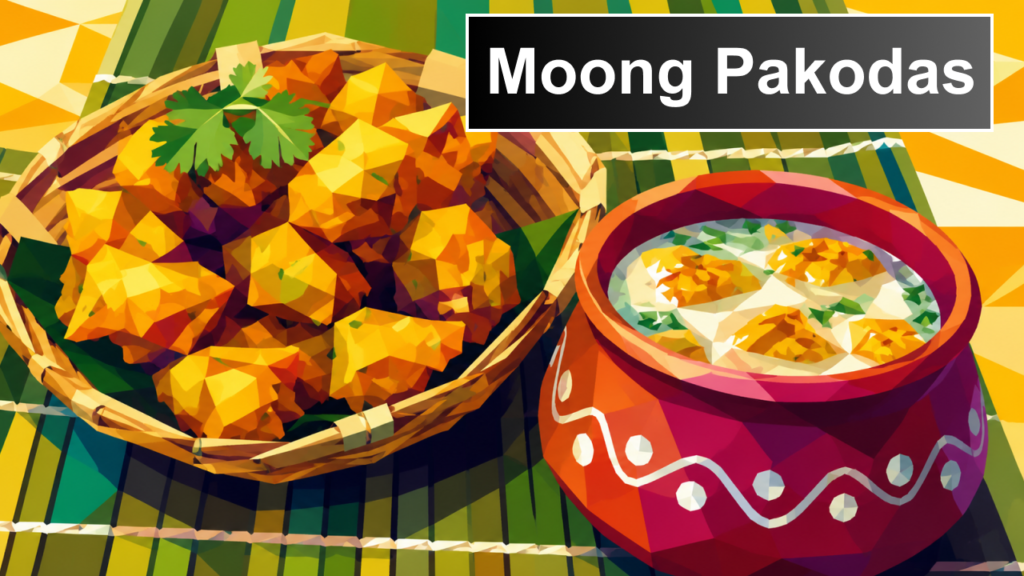
Moong Pakoda
Ingredients
Soaked Green Gram (Moong Dal) – 2 cups
Green Chilli – 1
Ginger – 1 small piece
Fresh Coriander – as required
Curry Leaves – as required
Veswar Masala – 1 teaspoon
Cumin Seeds – 1 teaspoon
Asafoetida (Hing) – ½ teaspoon
Salt – 1½ teaspoons
Curd – ½ cup (for Masala Buttermilk)
Oil – for deep frying
Method
Drain the soaked moong dal and grind it coarsely. Grind the ginger, green chilli, and coriander into a smooth paste.
Heat 2 teaspoons of oil and prepare a tempering with cumin seeds and asafoetida.
In a bowl, combine the ground moong dal, salt, Veswar Masala, green paste (reserve a little for the buttermilk), chopped curry leaves, and the hot tempering. Mix well.
While the frying oil heats up, prepare the masala buttermilk by mixing curd, water, the reserved green paste, and salt.
Deep-fry spoonfuls of the batter until crisp and golden brown.
Serve the pakodas as they are or with tamarind chutney. For a traditional variation, add a few hot pakodas to the masala buttermilk before serving.
Pakodas soaked in buttermilk become lighter to digest and develop a refreshing, tangy flavor.
Ayurvedic Benefits
Green gram (Moong Dal) is considered light (Laghu), easy to digest, and Tridosha-balancing, making it one of Ayurveda’s most wholesome legumes.
Ginger, cumin, asafoetida, green chilli, and Veswar Masala help stimulate digestive fire (Agni) and support healthy digestion.
Curry leaves and coriander aid digestion while enhancing the flavor and aroma of the dish.
Buttermilk (Takra) is traditionally valued for promoting digestion, supporting gut health, and helping balance Vata and Kapha.
Soaking the pakodas in seasoned buttermilk reduces the heaviness typically associated with fried foods, making them easier to digest.
This dish is best enjoyed fresh, preferably as part of a balanced lunch or during the rainy season in moderate portions.
Ayurvedic Note: Although moong is naturally light and digestible, deep frying increases heaviness. Enjoy these pakodas in moderation and pair them with buttermilk or digestive spices for better digestion.
Copyright © 2026 Vedic Intelligence™ – All Rights Reserved.