
The Milky Way of Ayurveda!

Milk, known as Dugdha, Ksheera and Payah in Sanskrit, holds an important place in traditional Ayurvedic dietary literature. Classical texts describe milk in terms of its taste (Rasa), post-digestive effect (Vipaka), potency (Virya), nourishing qualities and suitability for different individuals and circumstances. The following overview presents traditional Ayurvedic descriptions of milk and its different forms.
1. Synonyms and General Properties of Milk
The Sanskrit synonyms listed in the source include Dugdha, Ksheera, Payah, Stanyam and Bilaham. Some of these terms may have context-specific meanings in classical literature. According to traditional Ayurveda, milk is predominantly sweet in taste (Madhura Rasa) and sweet in its post-digestive effect (Madhura Vipaka). It is described as cooling in potency (Sheeta Virya), nourishing (Brimhana), strengthening and rejuvenating (Rasayana).
Classical descriptions also attribute the following properties to milk:
Nourishment: Traditionally considered supportive of bodily tissues (Dhatus) and overall growth.
Strength and vitality: Associated with Bala (strength) and Ojas (vitality and resilience in Ayurvedic theory).
Reproductive tissue: Traditionally described as supporting Shukra Dhatu, the reproductive tissue in Ayurvedic physiology.
Laxative action: Some classical descriptions attribute a mild bowel-loosening effect to milk.
Rejuvenation: Considered a restorative food in suitable circumstances.
Healing: Classical texts describe its use in supporting recovery and the union of fractured parts. These are traditional Ayurvedic descriptions. Their effects depend on the type of milk, the individual, the amount consumed and digestive tolerance. They should not be interpreted as proof that milk treats fractures or diseases.
2. Traditional Indications for Consuming Milk
Classical Ayurvedic texts describe milk as suitable in certain circumstances, including: After specific purification therapies, such as therapeutic purgation, emesis or Basti, when prescribed as part of a supervised regimen.
For individuals experiencing weakness, exhaustion or emaciation.
For children and older adults when milk is appropriate for their nutritional needs. For those requiring nourishment after considerable physical exertion.
In selected traditional dietary regimens for urinary disorders, burning sensations, excessive thirst, abdominal discomfort, bleeding disorders and certain reproductive or neurological conditions. The original text also mentions epilepsy and diseases of the female reproductive organs. These references reflect historical Ayurvedic indications, not established evidence that milk treats these conditions. Such symptoms and diseases require appropriate medical assessment. Milk is not suitable for everyone. People with milk allergy, lactose intolerance or other dietary restrictions may need alternatives.
3. Cow’s Milk (Go-Dugdha)
Traditional Ayurveda describes cow’s milk as sweet in taste and sweet in post-digestive effect. It is considered nourishing, relatively heavy to digest (Guru) and cooling in potency. Classical descriptions associate cow’s milk with nourishment of the bodily tissues, strength (Bala), vitality (Ojas) and certain effects on the doshas. Some texts describe it as useful in a range of conditions, but such statements should be understood within their historical medical framework rather than as modern clinical recommendations.
Its nutritional value includes protein, calcium and vitamin B12; the precise composition varies with the animal, feed and processing.
4. Traditional Descriptions of Milk from Different Cows
Some classical passages classify cow’s milk according to the animal’s colour. The supplied source states that:
Milk from a black cow is described as pacifying Vata.
Milk from a yellow cow is described as pacifying Pitta and Kapha.
Milk from a white cow is described as increasing Kapha.
Milk from red-coloured cows and another colour category is described as pacifying Vata. The wording of the final category is unclear in the supplied transcription, so it requires verification against the original Sanskrit edition.
The source also describes milk from a cow with a very young calf, or a cow whose calf has died, as aggravating all three doshas. It mentions a type transcribed as Baskayini as pacifying all three doshas and promoting nourishment and strength. The term Baskayini should be checked against the original text before publication. These classifications are traditional textual descriptions. There is insufficient modern scientific evidence to conclude that the colour of a cow reliably determines the Ayurvedic properties or health effects of its milk.
5. Milk According to the Animal’s Food and Environment
The source differentiates milk according to the cow’s habitat and feeding practices. It describes milk from animals living in dry regions or hilly areas as progressively heavier to digest, with its unctuousness influenced by the animal’s diet. It also distinguishes milk from cows fed small quantities of food mixed with fodder from milk produced by cows fed bran, hay or cottonseed.
These descriptions belong to the classical Ayurvedic framework. In modern nutrition, milk composition can vary with animal breed, feed, lactation stage and farming conditions. The traditional classifications should not be treated as universal rules for selecting milk.
6. Freshly Milked, Raw and Boiled Milk
Freshly milked milk
The classical source describes freshly milked, warm milk as strength-promoting, relatively easy to digest and supportive of the doshas when used appropriately. It also mentions Dharoshna milk, meaning milk consumed immediately after milking while still warm. However, freshly collected raw milk can contain harmful microorganisms. Freshness and warmth do not make it safe. Milk should be pasteurised or otherwise adequately heat-treated before consumption.
Raw milk
The source describes uncooked milk as Abhishyandi (traditionally understood as promoting obstruction or heaviness in bodily channels) and Guru (heavy to digest), with a tendency to increase Kapha and Ama in the Ayurvedic framework. The text makes exceptions for cow’s and buffalo’s milk and discusses human breast milk separately. These are historical descriptions, not modern food-safety guidance.
Food safety: Raw, unpasteurised animal milk can carry pathogens that cause serious illness. Use pasteurised milk or milk that has been properly boiled. Human breast milk is a separate subject and should not be equated with animal milk.
Boiled milk
The classical text differentiates milk according to how it is heated:
Boiled and consumed warm: Traditionally described as pacifying Vata and Kapha.
Boiled and then cooled: Traditionally described as pacifying Pitta.
Milk boiled with water: The source states that adding half its quantity of water and boiling until the water evaporates makes it lighter than raw milk.
Milk reduced by prolonged heating: Described as becoming progressively thicker, heavier and more unctuous, with increased nourishing and strengthening properties.
These are traditional interpretations of preparation methods. From a modern nutritional perspective, heating changes the milk’s water content and may affect certain heat-sensitive components, but it does not automatically make milk suitable for every person.
7. Milk Combined with Sweeteners
The supplied classical passage describes different effects when milk is consumed with different sweeteners:
Milk with Khanda (a type of sugar candy): Traditionally described as increasing Kapha and pacifying Vata.
Milk with refined white sugar candy (Sitopala): Described as supporting Shukra Dhatu and pacifying all three doshas.
Milk with jaggery: Described as useful in certain traditional contexts involving breathlessness, while increasing Pitta and Kapha.
These descriptions reflect traditional Ayurvedic theory. They do not establish that adding sugar or jaggery to milk treats reproductive problems or respiratory conditions. Added sugars contribute to overall sugar intake and should be used in moderation.
8. Milk According to Time of Day
The source describes differences between milk collected in the morning and evening:
Morning milk: Traditionally considered heavier and cooling in potency.
Evening milk: Described as lighter and as pacifying Vata and Kapha.
The source also discusses drinking milk at different times of day. It describes milk consumed earlier in the day as supportive of nourishment and digestive capacity, milk consumed around midday as strength-promoting, and milk consumed at night as beneficial in selected traditional contexts.
It further describes different effects across stages of life, including growth in children and nourishment in older adults.
These are traditional Ayurvedic interpretations, not scientifically established rules about the best time to drink milk. Individual tolerance, dietary requirements, sleep patterns and medical conditions are more useful considerations when deciding when and whether to consume it.
9. Milk as a Standalone Food and Its Use at Night
The source attributes to some Ayurvedic authorities the view that milk should be consumed by itself rather than alongside other foods, because combining foods in this way was traditionally believed to impair digestion and sleep. It also recommends consuming the full quantity of milk prepared for a nighttime serving. Another passage recommends milk at night in a traditional context involving a burning sensation after food consumed during the day.
These statements should be understood as historical dietary recommendations, not universal medical advice. There is no general requirement that everyone drink milk at night or consume it separately from other foods. People who experience reflux, digestive discomfort or disrupted sleep after drinking milk should adjust their intake according to their needs and seek medical advice if symptoms persist.
10. Milk Considered Unsuitable in Classical Ayurveda (Durd dugdha)
The supplied text advises avoiding milk that: Has an unusual colour or unpleasant taste. Has turned sour or developed an unpleasant smell.
Has coagulated or become abnormally solid. Has been mixed with sour substances or salt in the combinations discussed by the classical source.
In practical food-safety terms, milk with an unusual smell, appearance or texture should not be consumed. Follow storage instructions and use milk within its safe period. The classical warning against certain combinations reflects Ayurvedic dietary principles; it does not mean every food combination involving milk and a sour ingredient is automatically harmful. Suitability depends on the food, preparation, quantity and individual tolerance.
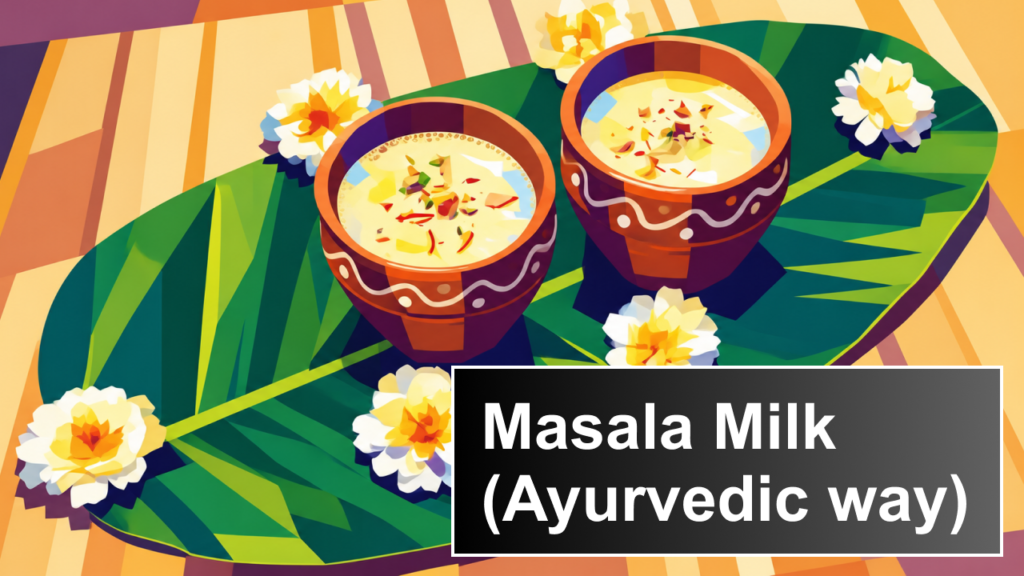
Masala Milk (Ayurvedic way)
Ingredients
Milk – ½ litre
Rock sugar – ¼ cup
Licorice (Mulethi) powder – ½ tsp
Cardamom powder – ¼ tsp
Cinnamon powder – ¼ tsp
Saffron – ¼ tsp
Chopped cashews and almonds – 2 tbsp
Gold coin – 1
Ghee – 1 tsp
Honey – 1 tsp
Method
Place the milk on the stove to heat. Add the gold coin to the milk. The coin should be thoroughly cleaned. Do not use any gold jewellery, as previously worn jewellery may not be hygienically clean. If you do not have a gold coin, there is no need to add one. Once the milk comes to a good boil, add the rock sugar, licorice powder, cardamom powder, cinnamon powder and a little saffron. Mix well. Then add the chopped cashews and almonds and ghee, and bring the milk to a boil again. The Ayurvedic milk is ready. Allow the milk to cool slightly, then add a little honey and serve. Do not add honey to very hot milk. Garnish with a little saffron and chopped cashews and almonds before serving.
From an Ayurvedic food perspective, this traditional milk preparation is considered nourishing, rich and strengthening.
n Ayurveda, milk (Kṣīra) is generally described as madhura (sweet), snigdha (unctuous), nourishing and supportive of Ojas. However, its use should be considered along with one’s digestion, constitution, and the way it is prepared.
For Sharad Ritu, the traditional seasonal framework emphasizes managing the Pitta that becomes aggravated during autumn. Milk’s cooling and nourishing qualities can therefore fit well into a Sharad-oriented diet, particularly when consumed appropriately.
“As Sharad arrives, Pitta rises with the returning heat. Ayurveda turns to gentle, nourishing foods — and milk has traditionally held a special place.”
Copyright © 2026 Vedic Intelligence™ – All Rights Reserved.